
Fluffy Sourdough Pancakes (That Even My Kid Asked for Twice)
Saturday mornings are pancake mornings in our house.
That sentence has been true for years, even when the pancakes were coming straight from a yellow box. I would empty the mix into a bowl, add an egg, splash in some water, and have breakfast on the table in under twenty minutes. It worked. The kids ate. Nobody complained.
But as I have started paying more attention to the ingredients we bring into our home, I have been slowly replacing convenience foods with homemade versions whenever it makes sense. Not all at once. Not in a way that would set me up for failure. Just one swap at a time, in places where the homemade version was clearly worth the small extra effort.
These sourdough pancakes are one of those swaps that stuck.
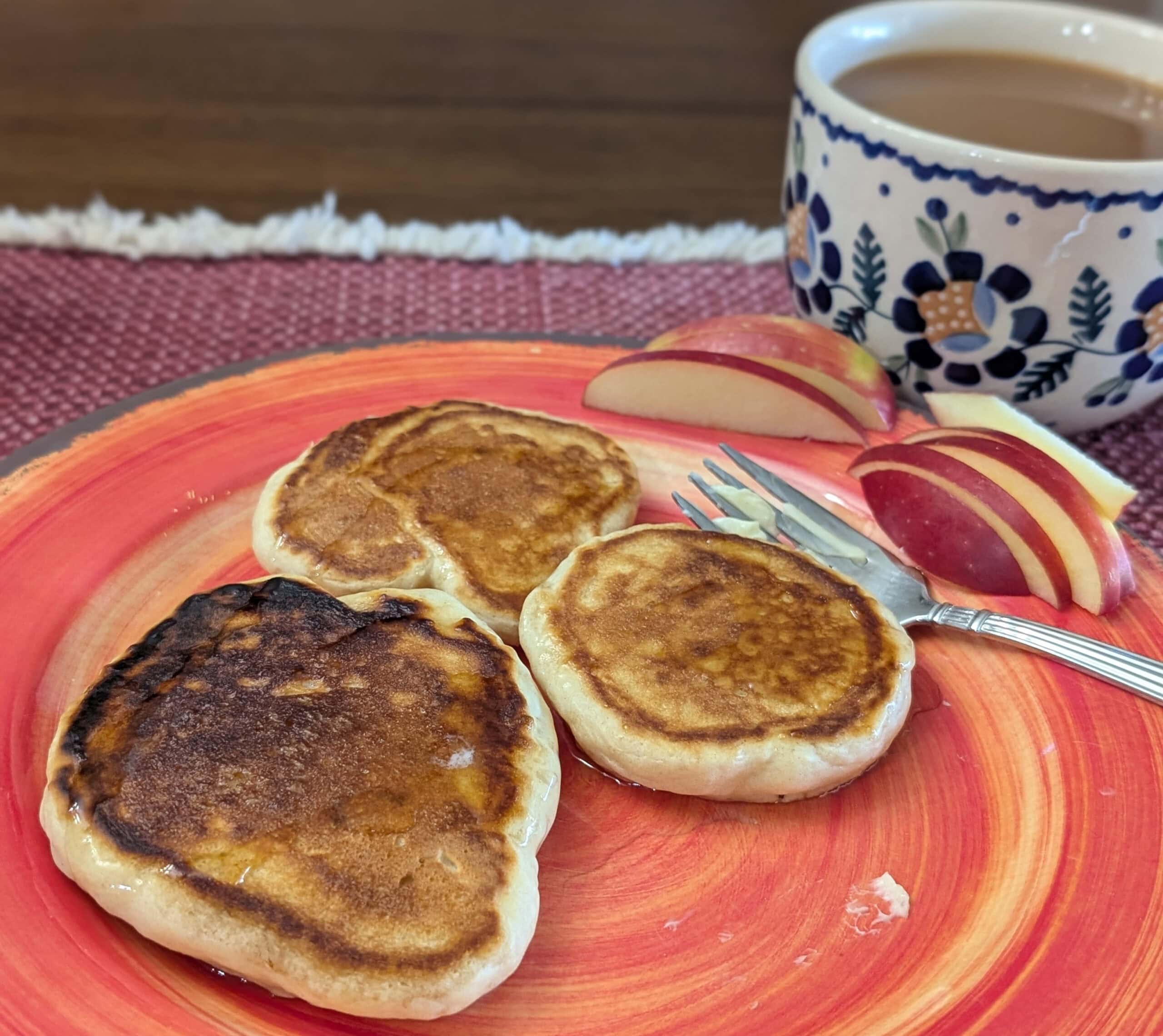
Now, instead of reaching for a boxed mix, I use my sourdough starter, organic ingredients, and a splash of vanilla to make fluffy pancakes from scratch. They are simple enough for a weekend morning, a great way to use up starter (or even discard), and they honestly taste better than any mix I have tried. Lighter. Fluffier. With that subtle tang you only get from sourdough.
Most importantly, they have become part of our Saturday routine.
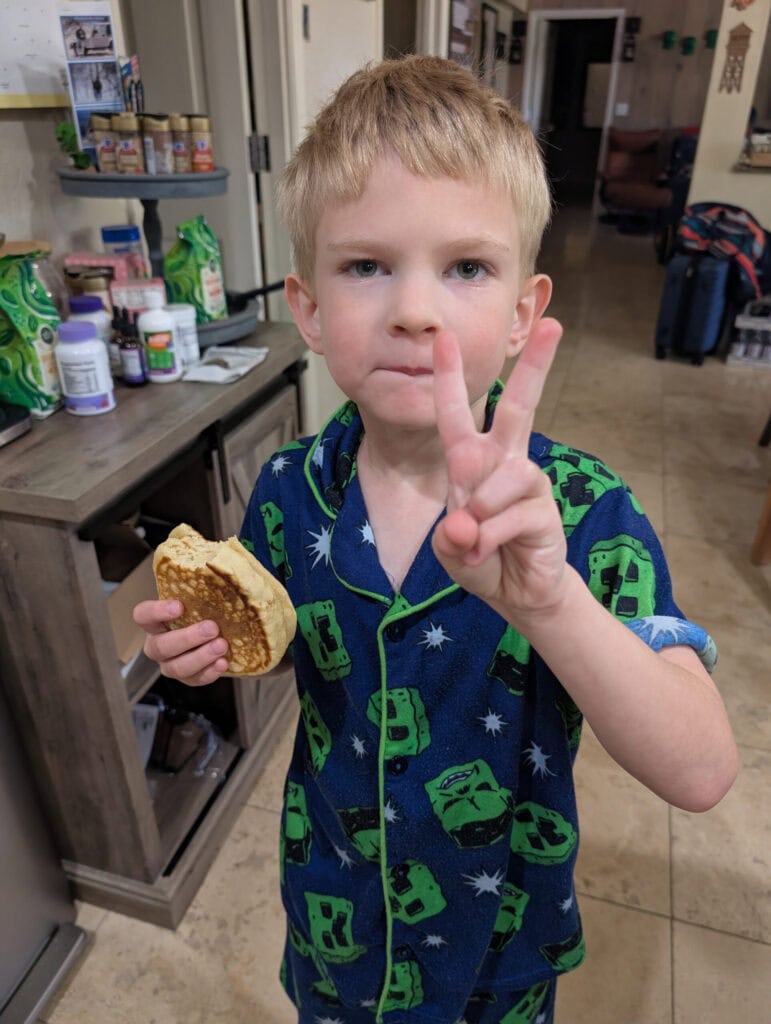
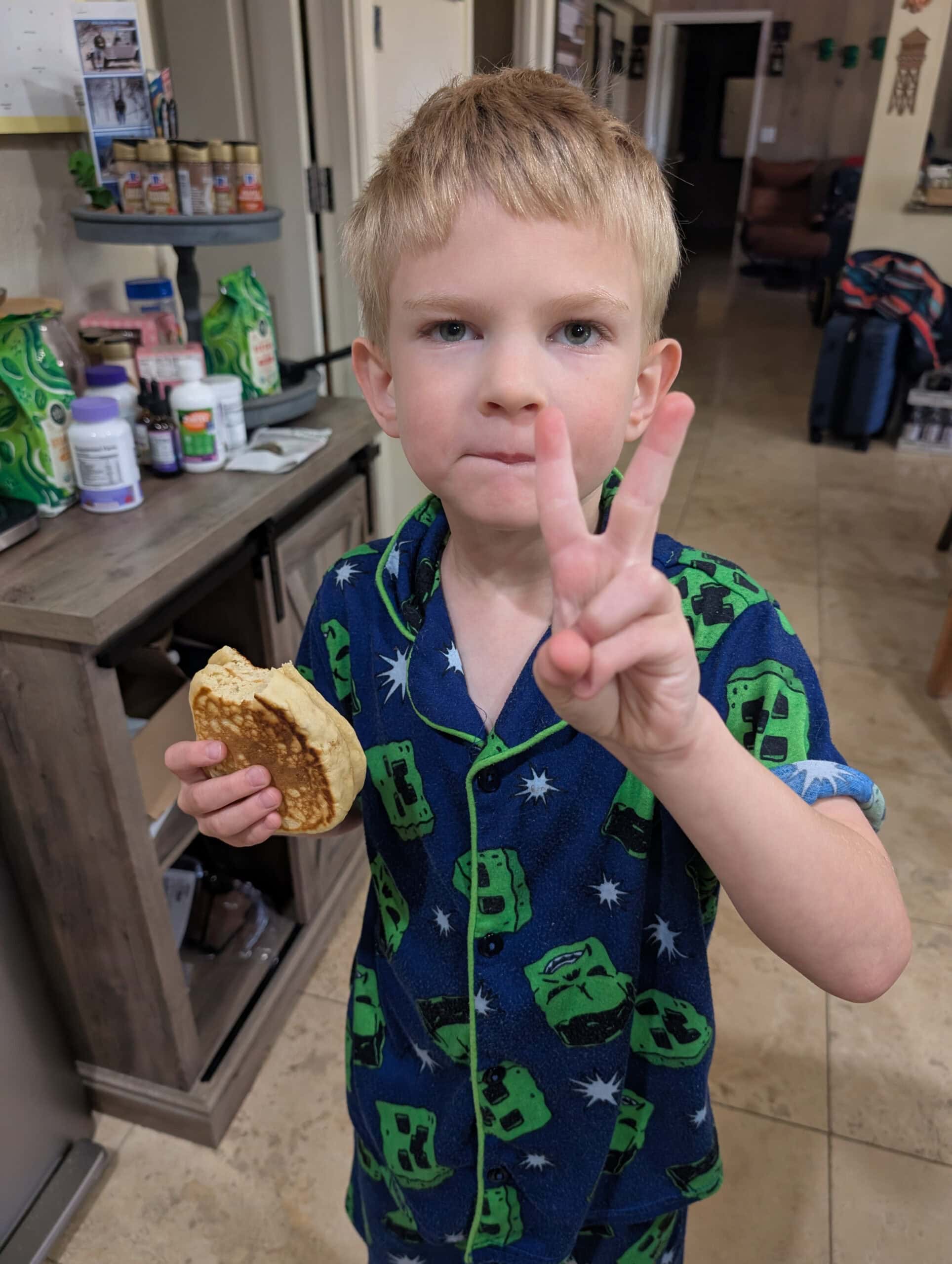
The morning I took these photos, my son ate his pancakes with apple slices on the side, finished breakfast, and then came back later asking for more as a snack. Around here, that is about the highest compliment a recipe can get. I am the kind of mom who measures recipe success in seconds, not in Instagram likes.
I enjoyed mine with a hot cup of coffee, my son had watermelon juice, and my husband had orange juice. We topped our pancakes with organic butter and organic golden syrup from Whole Foods, and breakfast disappeared quickly.
Why Sourdough Pancakes Are Worth the Swap
If you have only ever made pancakes from a box, switching to a from-scratch sourdough version might feel like a project. It is not. Once you have the ingredients out, this whole recipe comes together in roughly the same amount of time as a boxed mix. The difference is what you end up with.
Sourdough adds a slight tang that balances the sweetness, which means these pancakes do not taste flat or one-note the way some box mixes can. The fermentation also makes them lighter. The starter has been actively bubbling and developing structure for hours before you ever scoop it into your bowl, which translates to pancakes that puff up tall on the griddle and hold their lift even after they hit the plate.
A few more reasons we keep making these:
- Great use for sourdough starter (active or discard both work)
- Fluffy, tender texture with a slight tang
- Easy enough for busy mornings
- Made with pantry staples you probably already have
- Endlessly customizable with chocolate chips, blueberries, or whatever is in the fruit bowl
- Kid-approved by the toughest critic in the house
Ingredients
Method
- In a large mixing bowl, whisk together the flour, baking powder, baking soda, sugar, and salt.
- Add the sourdough starter, milk, egg, vegetable oil, and vanilla directly to the bowl. Mix just until combined. A few lumps are perfectly fine. Overmixing makes pancakes tough.
- Optionally, let the batter rest 5 to 10 minutes while you heat the griddle. This gives the gluten time to relax and the leavening time to start working, which makes for noticeably fluffier pancakes.
- Lightly grease a griddle or skillet with butter. Heat over medium-low heat. Water dropped on the surface should sizzle and dance, not disappear instantly.
- Scoop batter onto the hot griddle (about a quarter cup per pancake for standard size). Add chocolate chips or blueberries to individual pancakes if desired.
- Cook until bubbles form across the surface and the edges look set, about 2 to 3 minutes. Flip gently and cook another 1 to 2 minutes until golden brown and cooked through.
- Serve hot with butter, syrup, and fresh fruit.
Notes
A Note on Your Sourdough Starter
I make these pancakes with active starter, the same starter I use for my bread. The morning I baked the pancakes pictured here, my starter was fed at a 1:2:2 ratio (one part starter, two parts water, two parts flour) the night before and was ready for cooking in the morning. That gave me a starter that was active, bubbly, and just past its peak.
But pancakes are forgiving. You can absolutely make this recipe with sourdough discard straight from the fridge if that is what you have on hand. The baking powder and baking soda in the recipe are doing the heavy lifting for the rise, so the starter is mostly there for flavor and a little extra structure.
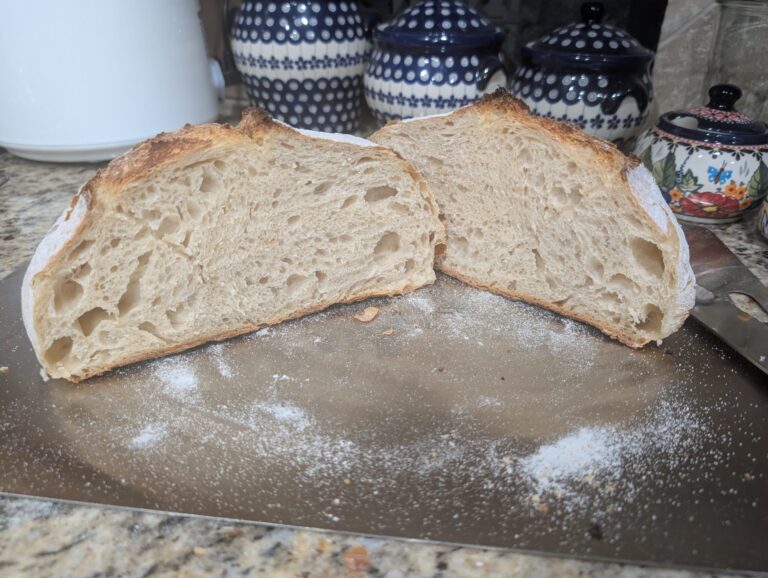
If you are new to sourdough and not sure where to start, I would actually point you toward my Simple Everyday Sourdough Bread recipe first. That post walks through what an active starter looks like and how to know when it is ready to bake with. Once you have a starter going, pancake mornings are just one of the many ways you can put it to work.
What You Will Need
Nothing fancy. Most of this is probably already in your kitchen.
- A large mixing bowl
- A whisk
- A measuring cup or scoop (I use a quarter-cup for my son’s pancakes)
- A griddle, skillet, or flat top
- A spatula thin enough to slide under a pancake without folding it
- Butter or oil for greasing the cooking surface
I cooked mine on a double-burner flat top griddle, which makes breakfast for the whole family much easier. It fits six small pancakes at a time, which means everyone is eating warm pancakes together instead of one person finishing their stack while the next person is still waiting on theirs. If you do not have one and you cook for more than a couple people, it is one of the better small kitchen investments I have made.
This post may contain affiliate links. If you purchase through one of these links, I may earn a small commission at no extra cost to you. I only link to products I actually use in my kitchen. You can read my full affiliate disclosure here.
Ingredients
- 260 grams all-purpose flour
- 10 grams baking powder
- 6 grams baking soda
- 30 grams granulated sugar
- 6 grams salt
- 250 grams active sourdough starter (mine was fed at a 1:2:2 ratio)
- 12 ounces whole milk, room temperature
- 1 large egg, beaten
- 2 tablespoons vegetable oil
- 1 tablespoon vanilla extract
I used organic ingredients whenever possible. Room temperature milk and egg help everything come together more easily and prevent the batter from getting lumpy. If you forget to set them out, a quick water bath for the egg and a few seconds in the microwave for the milk will do the trick.
Instructions
Step 1: Mix the Dry Ingredients
In a large mixing bowl, whisk together the flour, baking powder, baking soda, sugar, and salt.
This is the moment to make sure your baking powder and baking soda are still fresh. Both lose their lifting power over time, and if you have had them in the pantry for more than six months, your pancakes might come out flatter than they should. A quick test: drop a pinch of baking soda into a small bowl of vinegar. It should fizz immediately. Baking powder should fizz when you drop a pinch into hot water.
Step 2: Add the Wet Ingredients
Add the sourdough starter, milk, egg, vegetable oil, and vanilla directly to the bowl.
Mix just until combined. A few lumps are perfectly fine. Overmixing is the single biggest mistake people make with pancakes, and it is what turns a tender, fluffy pancake into a tough, chewy one. Stop as soon as the dry flour disappears. The batter should still look a little bit shaggy and lumpy, which is exactly what you want.
If you have time, let the batter rest for five to ten minutes while you heat the griddle. This gives the gluten a chance to relax and the leavening to start working, which makes for a noticeably fluffier pancake.
Step 3: Heat the Griddle
Lightly grease a griddle or skillet with butter.
Heat over medium-low heat. Not medium. Not medium-high. Medium-low. Pancakes need time for the inside to cook before the outside gets too dark, and a hot griddle is the most common reason pancakes come out raw in the middle.
You will know the surface is ready when a few drops of water sizzle and dance across the surface before evaporating. If the water just sits there, the pan is not hot enough. If it disappears immediately with an aggressive hiss, your pan is too hot.
Step 4: Cook the Pancakes
Using a measuring cup or scoop, pour batter onto the hot griddle.
I used a quarter-cup measuring cup because it is the perfect size for my son. Two pancakes with a side of fruit makes a great breakfast portion for him, and the smaller size is easier for little hands to manage with a fork.
You can easily adjust the size depending on who you are feeding:
- Smaller (two tablespoons) for silver dollar pancakes, which kids love
- A quarter cup for standard everyday pancakes
- A third or half cup for big diner-style pancakes
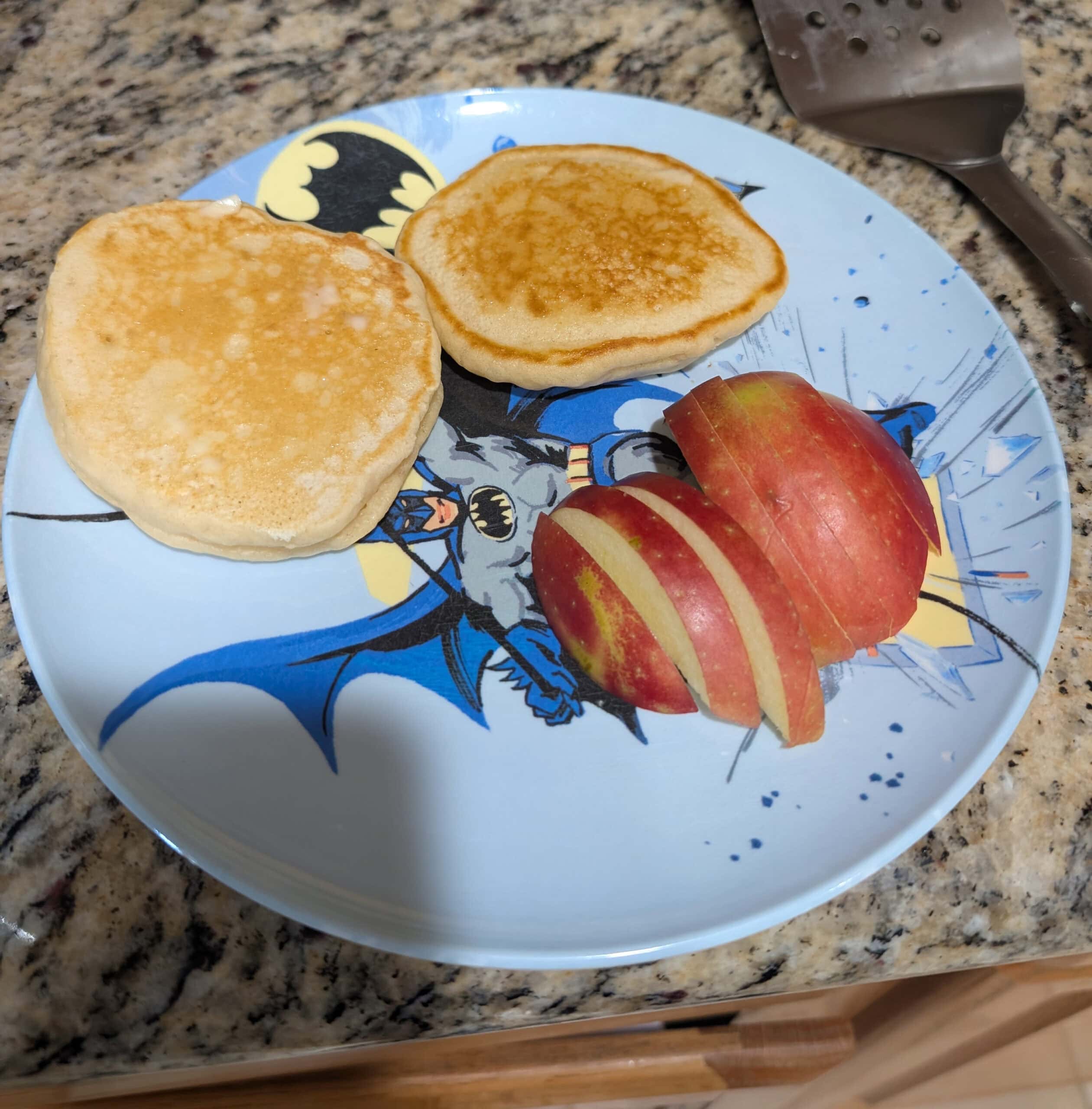
Cook until bubbles begin to form across the surface and the edges look set, about two to three minutes. Resist the urge to flip them too early. A pancake that is ready to flip will release from the pan easily and have a dry-looking rim.
Flip gently and cook for another one to two minutes until golden brown and cooked through. You can peek under the edge if you are not sure.
Optional Add-Ins
Want to switch things up?
Add any of the following immediately after pouring the batter onto the griddle, before the surface sets:
- Chocolate chips (mini or regular)
- Fresh or frozen blueberries
- Sliced banana
- Diced apple with a sprinkle of cinnamon
- A small spoonful of jam swirled into the surface
Adding mix-ins after the batter hits the griddle (instead of stirring them into the bowl) keeps them evenly distributed and lets everyone customize their own pancakes. My son gets chocolate chips, my husband and I usually go for blueberries, and nobody fights over what got mixed in.
Tips for the Fluffiest Pancakes
If your pancakes ever come out dense, flat, or rubbery, the fix is usually one of these:
- Do not overmix the batter. Mix until just combined. Lumps are good. A smooth, perfectly homogeneous batter means the gluten has been overworked, and your pancakes will be tough.
- Let the batter rest. Even five minutes makes a difference. The flour fully hydrates, the gluten relaxes, and the leavening starts working before the batter hits the heat.
- Use medium-low heat. Higher heat browns the outside before the inside is fully cooked. Lower heat gives the pancake time to puff up and set through.
- Make sure your leavening is fresh. Old baking powder and soda are responsible for more sad pancakes than any other single factor.
- Cook one test pancake first. Every griddle has its quirks, and the first pancake will tell you whether your heat is right and your batter is the right consistency.
- Use real butter on the griddle. It browns better, releases easier, and tastes like Saturday morning.
Troubleshooting Common Pancake Problems
My pancakes are flat
Usually a sign of either old baking powder or soda, or overmixed batter. Test your leavening with vinegar (for soda) or hot water (for powder), and remember that lumps in the batter are normal and welcome.
The outside is browned but the inside is raw
Your heat is too high. Drop it to medium-low and give the pancakes more time. A perfectly cooked pancake takes about three minutes per side at the right temperature.
Pancakes are sticking to the pan
Your pan may not be hot enough, or you may need more butter. Make sure the griddle is fully preheated before the first pour and re-grease between batches.
The batter is too thick or too thin
If it is too thick, add a splash of milk one tablespoon at a time. If it is too thin, sprinkle in a tablespoon of flour and gently mix it in. The right consistency is thick enough to mound slightly when you scoop it, but loose enough to spread on its own once it hits the griddle.
Serving Suggestions
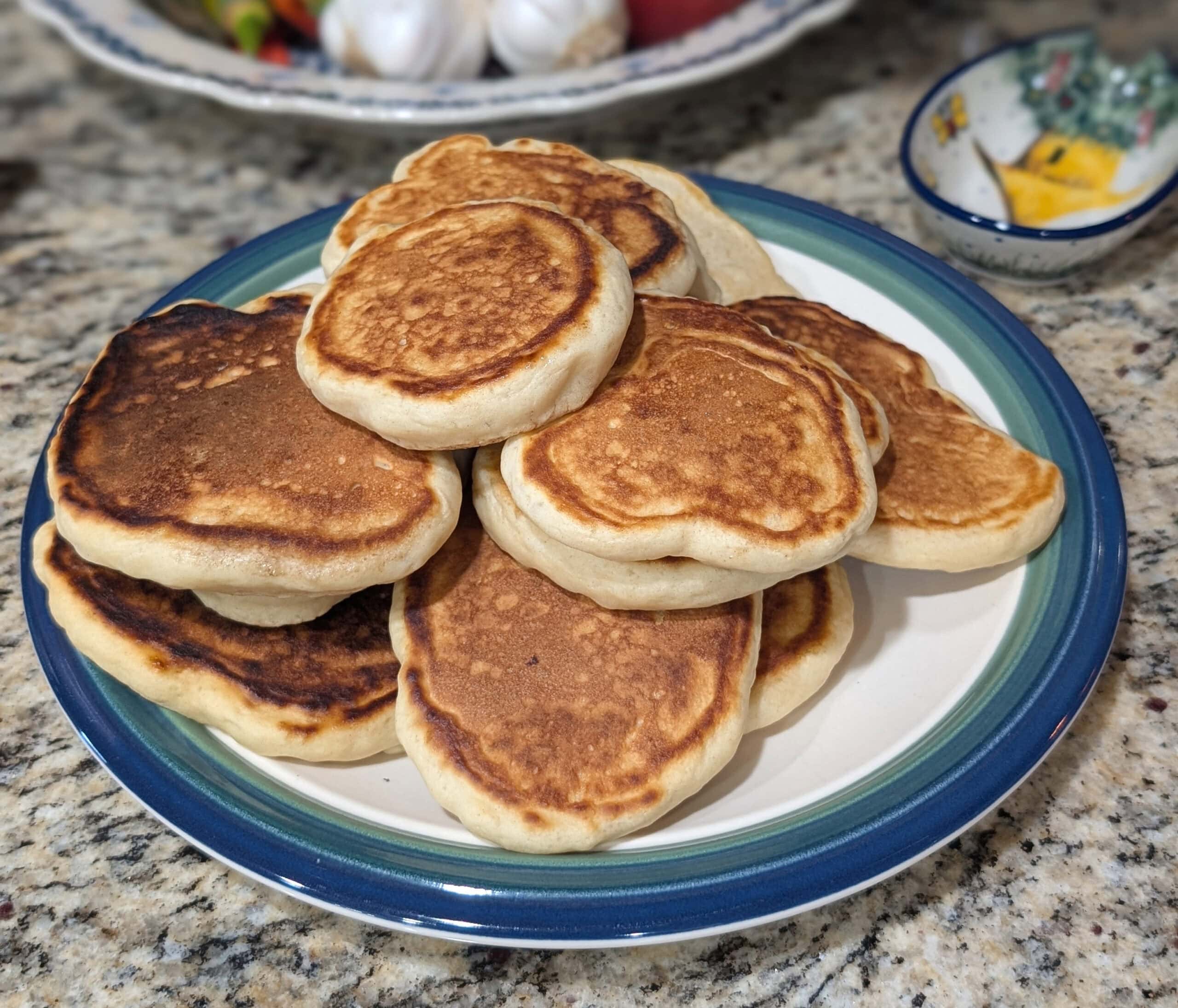
We served ours with:
- Organic butter
- Organic golden syrup
- Fresh fruit (sliced apples that morning)
Our favorite combination is pancakes with sliced apples on the side, but pancakes are easy to dress up depending on what you have on hand. A few other ideas that work well:
- Real maple syrup
- Honey, especially with a sprinkle of cinnamon
- Powdered sugar and a squeeze of lemon
- Whipped cream and berries for a brunch-style stack
- A spoonful of homemade jam
- Crispy bacon, eggs, or sausage links for a complete breakfast
The Saturday we made these, breakfast also doubled as quality family time. We sat at the table together, the kids got to pick their own add-ins, and the whole thing took longer than a weekday breakfast usually does. Those slow Saturday mornings are the entire reason I cared enough to start making these from scratch in the first place.
Storing and Freezing Leftovers
This recipe makes more than my family can usually eat in one sitting, which is by design. Leftover pancakes are one of my favorite weekday breakfast shortcuts.
In the refrigerator: Store leftover pancakes in a zip-top bag or airtight container in the refrigerator for three to five days. To reheat, microwave for thirty to forty-five seconds or until warmed through. They will lose a little of their fresh-off-the-griddle texture, but they hold up well.
In the freezer: Let pancakes cool completely, then stack them with a piece of parchment paper between each one so they do not stick together. Store in a freezer bag for up to three months. Reheat directly from frozen in the toaster, which gives you crispy edges and a soft middle in about two minutes, or in the microwave for sixty to ninety seconds.
I usually double the recipe on Saturday and freeze the extras. My son grabs a pancake from the freezer and tosses it in the toaster before school, which has saved us more than a few rushed mornings.
Make Ahead Tips
For an even faster Saturday morning:
- Mix the dry ingredients the night before. Whisk them together and leave them in the bowl, covered, on the counter.
- Pre-measure your starter. Scoop out 250 grams the night before so you are not fumbling with a scale at 7 a.m.
When you are ready to cook, all you have to do is add the wet ingredients to the dry, stir, and go.
Frequently Asked Questions
Can I use unfed sourdough discard instead of active starter?
Yes. The baking powder and baking soda provide all the rise these pancakes need, so the starter is mostly there for flavor and structure. Discard straight from the refrigerator works perfectly fine. The flavor will be slightly more tangy with older discard, which some people prefer.
Can I substitute non-dairy milk?
Absolutely. Almond, oat, and soy milk all work. Buttermilk also works beautifully and gives the pancakes a richer, slightly tangier flavor. If you use buttermilk, you can leave the recipe otherwise unchanged.
Can I make these gluten-free?
I have not tested it yet, but a one-to-one gluten-free flour blend should work. You may need to add an extra tablespoon or two of milk because gluten-free flours tend to absorb more liquid.
How long can the batter sit before I cook it?
You can let the batter rest for up to thirty minutes at room temperature. After that, the leavening starts to lose its lift, and the pancakes will not be quite as fluffy. If you need to wait longer than that, refrigerate the batter and use it within a few hours.
Can I double the recipe?
Yes, easily. This recipe scales up beautifully if you are feeding a crowd or want extras to freeze.
Why are mine not fluffy?
Nine times out of ten, the culprit is either overmixed batter or old baking powder. Check both before assuming the recipe is the problem.
Final Thoughts
These pancakes are everything I want in a family breakfast: simple ingredients, easy prep, and happy kids.
Whether you are looking for another way to use your starter or just want a reliable pancake recipe to keep in your back pocket, this one is worth keeping around. It has earned its place in our Saturday morning rotation, and I expect it will be in our recipe rotation for years.
And if your kid comes back for seconds, you will know you have got a winner.
Want to know more about why I bake the way I do or how this whole blog got started? Read my full story here. Or browse From the Kitchen for more real-life sourdough recipes.
Happy baking, friends.